





Book
People enjoying laughter outdoors on a sunny day, surrounded by lush trees and decorative hanging ornaments.

Your hearing health matters

"When you lose your sight, you lose touch with things. When you lose your hearing, you lose touch with people."

Helen Adams Keller


Hearing loss

Hearing health for life

Hearing health is an essential part of life, because hearing connects people. Hearing well contributes directly to building and maintaining interpersonal relationships, and the ability to hear lets you engage fully in your activities.

That’s why HearingLife focuses on providing outstanding hearing wellness care. It's simple. The nuance of sound matters to your life.

Take the next step to hearing well

One in five adults has hearing loss in the United States.

At least according to the Hearing Loss Association of America.¹

In fact, hearing loss is the third most prevalent health condition here and 48 million Americans report hearing loss.² Hearing loss can lead to depression.² That’s why it’s important to address hearing loss early.

A central large blue stick figure stands surrounded by four smaller blue stick figures, representing hierarchy, growth, or progression in a clean, minimalist design.
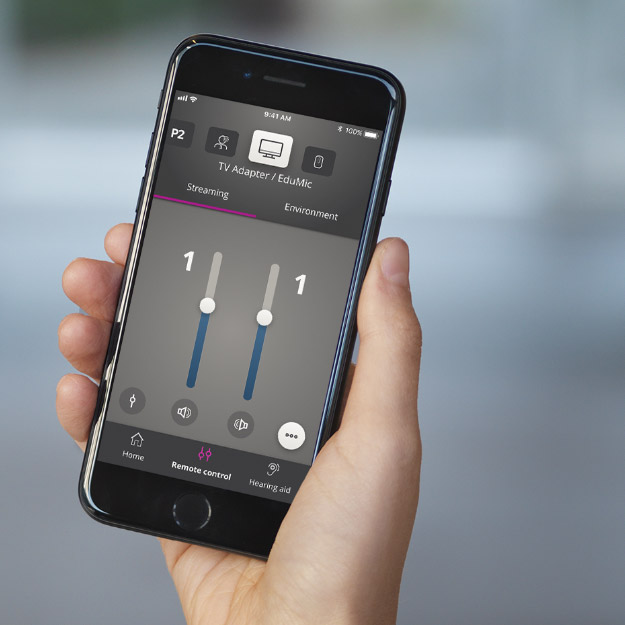
Smartphone screen displays a hearing aid remote control app with adjustable volume sliders, streaming options, and icons for TV Adapter/EduMic against a blurred indoor background.

"Listening in Stereo" gives life to words and music

More than just for enjoying music, you need input from both ears to fully engage the brain, use spacial awareness and identify sounds correctly.

We help you understand the importance of hearing well in both ears and how to achieve excellent hearing "in stereo." This important resource provides your brain context to the sounds you hear and lets you enjoy the nuances of voices, tones and ambient sounds that add richness to the soundscape.

Why treat hearing loss?

The sooner you take action, the sooner you stop the negative effects of hearing loss from developing - and the sooner you improve your hearing health, regain sharpness and confidence.

Research consistently demonstrates the considerable effects that hearing loss has on social, psychological and cognitive performance. Over time, reduced aural stimulation can actually impair the brain’s ability to process sound and recognize speech. When you can’t hear what’s going on around you, your mental sharpness suffers. Hearing loss can lead to isolation and depression. This is why it’s important to begin treatment as early as possible.

Have concerns related to your hearing?

Beyond the individual, hearing loss can impact family members, friends and colleagues. Seek our help if you have these concerns:

  • Do you not know where sounds are coming from?
  • Do you feel alone in social situations?
  • Are you having problems hearing what people have said?
  • Do you have problems following conversations in gatherings with several people?

Speak with a professional

Woman seated on a grey couch in a modern living room, gazing thoughtfully with her head resting on her hand; behind her are a textured furry cushion and a tripod lamp.

A worker wearing hearing protection and gloves operates an angle grinder to cut metal, emitting sparks in a workshop with tools and equipment visible in the background.
Noise-induced and sudden hearing loss
Overexposure to excessive or sudden noise can cause sudden hearing loss or noise-induced hearing loss that worsens over time. Military personnel, first responders, kindergarten teachers, factory workers and farmers are among the many professionals at risk. Rock concerts and loud earphones can also damage people’s hearing. That's why it’s important to wear ear protection when exposed to excessive noise.

Causes of hearing loss

Smiling elderly woman with gray braided hair and a beige sweater, expressing excitement indoors with a blurred background.
Age-related hearing loss
Over the decades, your hearing suffers from wear and tear on the system. The most common symptoms include difficulty hearing soft voices and trouble hearing normal speech, especially when there is noise in the background. Often, relatives notice age-related hearing loss before the individual with the issue becomes aware of it.

Help someone with hearing loss

Side profile of a woman’s ear with zigzag lines denoting pain or ringing, wearing a floral earring, with hair partially covering the ear.
What is tinnitus?
Tinnitus is a symptom of an underlying condition, such as hearing loss or an ear injury. It can have a huge impact on the lives of some people. About 90% of people with tinnitus also have some degree of hearing loss,4 and may benefit from hearing aids.

Tinnitus

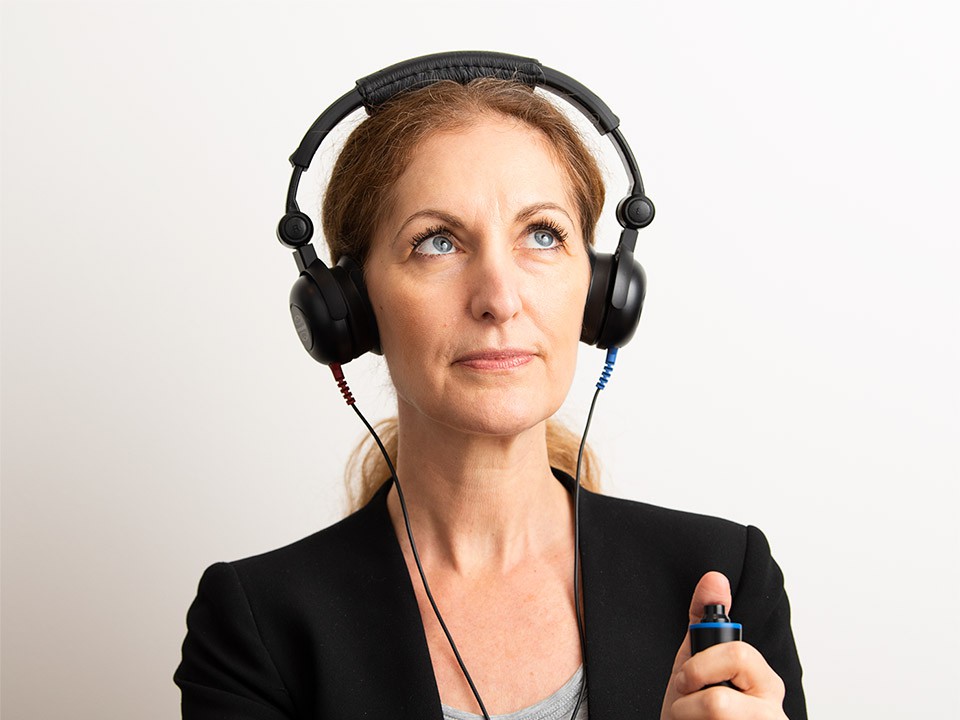
Woman using headphones and pressing a button during a professional hearing test.

Quiz yourself: Should I get my hearing checked?

Answer a few questions to see if you could benefit from a hearing test.*

Question 1 – Around the table
Do you have trouble following conversations when there are 4 or more people present?
Have you received advice from your family or friends to get your hearing tested?
Do you ever struggle to understand what others are saying because you cannot hear properly?
Do you find yourself turning up the TV or radio even when the volume is loud enough for others?

Your Result:

A hearing test is relevant for you

Your answers indicate that you experience symptoms of hearing loss. We strongly recommend booking a hearing assessment in one of our hearing centers.

The result is an indication. An in-person hearing assessment can determine if you have a hearing loss.


Book your complimentary hearing assessment:

Your Result:

A hearing test seems relevant for you

Your answers indicate that you experience some symptoms of hearing loss. We recommend booking a hearing assessment in one of our clinics.

The result is an indication. An in-person hearing assessment can determine if you have a hearing loss.


Book your complimentary hearing test:

Your Result:

It cannot be determined here if a hearing test is relevant for you

Your answers do not indicate that you experience symptoms of hearing loss. However, we encourage you to book a complimentary hearing assessment to establish a baseline.

The result is an indication. An in-person hearing assessment can determine if you have a hearing loss.


Book your complimentary hearing assessment:

Step 1 of 3

1 Hearing Loss Association of America

Roy, R. A. (2018). Auditory working memory: A comparison study in adults with normal hearing and mild to moderate hearing loss. Global Journal of Otolaryngology, 13(3), 1-14. Https://doi.org/10.19080/GJO.2018.13.555862

Jayakody, D. M. P., Wishart, J., Stegeman, I., Eikelboom, R., Moyle, T. C., Yiannos, J. M., Goodman-Simpson, J. J., & Almeida, O. P. (2022). Is there an association between untreated hearing loss and psychosocial outcomes? Frontiers in Aging Neuroscience, 14. https://doi.org/10.3389/fnagi.2022.868673

Lawrence, B. J., Jayakody, D. M. P., Bennett, R. J., Eikelboom, R. H., Gasson, N., & Friedland, P. L. (2020). Hearing loss and depression in older adults: A systematic review and meta-analysis. The Gerontologist, 60(3), e137–e154. https://doi.org/10.1093/geront/gnz009