Book
9.4/10 Based on 175,002 reviews
Senior man holding his ear, suggesting hearing concerns or sensitivity.

What are hearing aids behind the ear?

As indicated by the name, hearing aids behind the ear have a design that allows the main body of the hearing aid to sit behind the ear. A clear, discreet tube is then connected to an ear mold or dome and placed inside the ear canal.

Hearing aids behind the ear are the most widely used types of hearing aids on the market today. Recently, they have become smaller (the same is true for in-the-ear hearing aids), more adaptable, and much more powerful.

Behind-the-ear hearing aids

Ear with a hearing aid in a colorful illustration style
Versatile
They come in various styles and colors, are suitable for mild-to-severe hearing loss, and can include a wide range of features.
Ear icon featuring a heart shape integrated into the design.
Comfortable
Placed partially behind and in your ear, they provide a comfortable listening experience and are easy to adjust.
battery symbol with a lightning bolt indicating charging
Powerful
With both rechargeable and disposable options available, they can house large batteries (thereby increasing battery life).
People laughing and talking while sharing a meal at a table with coffee and assorted dishes. Close-up of an ear wearing a miniRITE R hearing aid by Oticon. Close-up of an ear wearing a miniRITE R hearing aid by Oticon. Three hearing aid models (miniRITE, ITC, Plus/Ultra Power) displayed in circular frames, illustrating their positions behind or in ears, set against a neutral light background. Left ear with a miniRITE hearing aid device and right ear with a Plus/Ultra Power hearing aid, labeled for comparison. Close-up of an ear wearing a miniRITE R hearing aid by Oticon. Close-up of an ear wearing a miniRITE R hearing aid by Oticon. Different types of hearing aids displayed: IIC in a woman's ear, CIC in a person's ear, miniRITE behind a man's ear, and ITC in another person's ear. Three labeled hearing aid types: miniRITE, Half Shell, and Full Shell shown on ears.

Hearing aid finder: See what type suits you

Take 1 minute to find out what hearing aid model suits your preferences.

What is your level of hearing loss?
What is more important for you in a hearing aid?
What is your preferred type of battery?

Your result

Based on your answers the following hearing aid type would suit your needs:

  • miniRITE R

*The result of the quiz may only be used for guidance and is not meant to replace a more accurate measurement of your hearing abilities and needs by one of our hearing care experts.

Would you like to visit us for your risk-free trial?

Your result

Based on your answers the following hearing aid type would suit your needs:

  • miniRITE R

*The result of the quiz may only be used for guidance and is not meant to replace a more accurate measurement of your hearing abilities and needs by one of our hearing care experts.

Would you like to visit us for your risk-free trial?

Your result

Based on your answers the following hearing aid types would suit your needs:

  • miniRITE
  • BTE Plus/Ultra Power
  • In-the-canal (ITC)

*The result of the quiz may only be used for guidance and is not meant to replace a more accurate measurement of your hearing abilities and needs by one of our hearing care experts.

Would you like to visit us for your risk-free trial?

Your result

Based on your answers the following hearing aid types would suit your needs:

  • miniRITE
  • BTE Plus/Ultra Power

*The result of the quiz may only be used for guidance and is not meant to replace a more accurate measurement of your hearing abilities and needs by one of our hearing care experts.

Would you like to visit us for your risk-free trial?

Your result

Based on your answers the following hearing aid type would suit your needs:

  • miniRITE R

*The result of the quiz may only be used for guidance and is not meant to replace a more accurate measurement of your hearing abilities and needs by one of our hearing care experts.

Would you like to visit us for your risk-free trial?

Your result

Based on your answers the following hearing aid type would suit your needs:

  • miniRITE R

*The result of the quiz may only be used for guidance and is not meant to replace a more accurate measurement of your hearing abilities and needs by one of our hearing care experts.

Would you like to visit us for your risk-free trial?

Your result

Based on your answers the following hearing aid types would suit your needs:

  • miniRITE
  • Invisible-in-the-canal (IIC)
  • Completely-in-the-canal (CIC)
  • In-the-canal (ITC))

*The result of the quiz may only be used for guidance and is not meant to replace a more accurate measurement of your hearing abilities and needs by one of our hearing care experts.

Would you like to visit us for your risk-free trial?

Your result

Based on your answers the following hearing aid types would suit your needs:

  • Half shell / full shell
  • miniRITE

*The result of the quiz may only be used for guidance and is not meant to replace a more accurate measurement of your hearing abilities and needs by one of our hearing care experts.

Would you like to visit us for your risk-free trial?

Step 1 of 6

Behind-the-ear hearing aid styles

Learn about and compare the different styles

Receiver-in-the-ear hearing aids

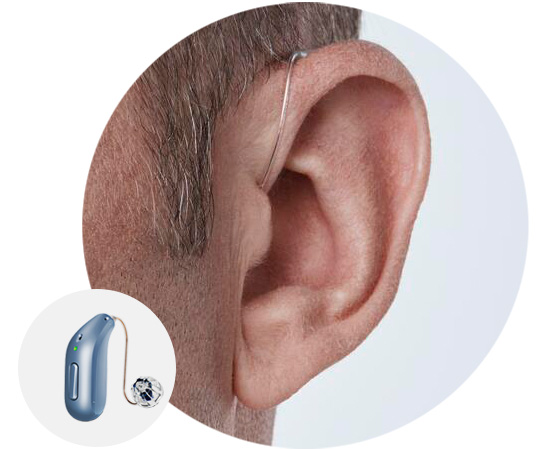
The RITE and the smaller miniRITE hearing aid is placed discreetly behind the ear and is connected by a thin wire which places the speaker or receiver inside the opening of the ear or ear canal.

  • Suitable for most types of hearing loss
  • Smaller and less noticeable than traditional BTE hearing aids
  • Rechargeable battery options available 
  • Able to connect to smart devices via Bluetooth®
  • Often connected to a small dome for ventilation

Book risk-free, 30-day trial See model examples

Receiver-in-the-ear hearing aid worn discreetly behind the ear.

Behind-the-ear (BTE) hearing aids

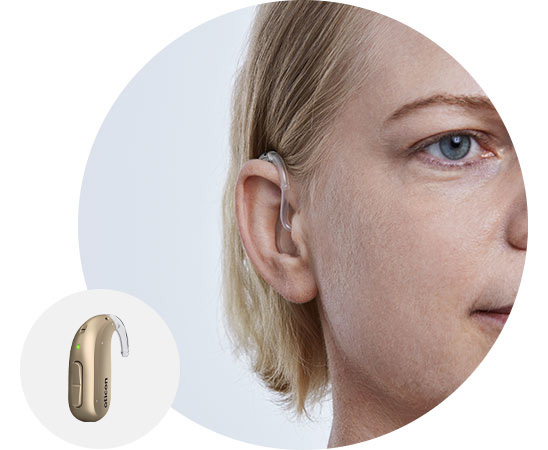
A clear, thin tube connects the main body of the hearing aid (nestled behind the ear) to an earmold or dome that fits inside the ear canal.  The following features make BTE hearing aids a versatile option: 

  • Able to connect to smart devices via Bluetooth®
  • Suitable for all types of hearing loss 
  • Suitable for all ear and ear canal sizes 
  • Able to accommodate high-tech features (due to larger size)
  • Telecoil, volume and program controls are easy to manipulate
  • Larger battery size provides more power

Book risk-free, 30-day trial See model examples

Behind-the-ear hearing aid showcased on a woman, highlighting its sleek design and placement.
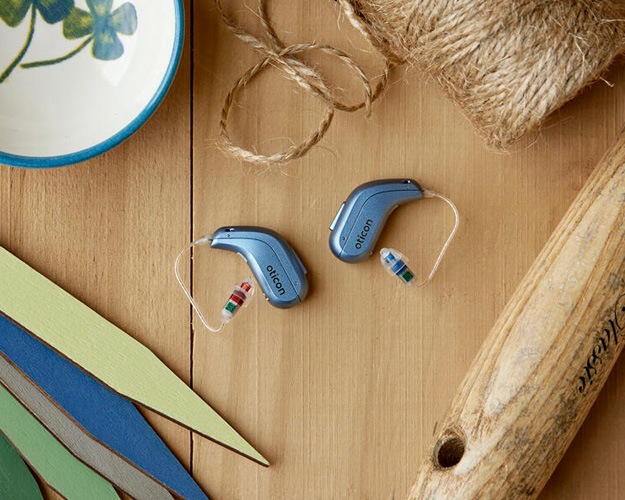
Behind-the-ear hearing aids on a wooden surface surrounded by crafting supplies such as string, felt, and a paintbrush.

Which behind-the-ear hearing aid is best?

The 4D user intent sensor technology inside Oticon Intent™ uniquely adapts to each moment using breakthrough sensors, manages wind and unpredictable sounds, and has been designed to be smaller yet more powerful than previous behind-the-ear models.

  • Improved clarity – Hear more clearly, be more engaged and enjoy life fully with 4D Sensor technology.
  • All-day confidence – Get the power to enjoy your day with all-day battery life‡ packed into a small, discreet design.
  • Modern connectivity – Quickly and easily connect to the devices and the people that matter most to you.
Try RISK-FREE for 30 days** Oticon Intent™

Open-fit for behind-the-ear hearing aids

Open-fit (also called Corda miniFit) is a thin tube mounted on behind-the-ear hearing aids with a dome or micro mold as an earpiece.

An ultra-thin, discreet solution, delivering all the benefits of open fittings:

  • Keeps the ear canal open so that sound can enter more naturally
  • Filters out background noises
  • Includes a more powerful battery than most behind-the-ear hearing aids 

Pros and cons of hearing aids behind the ear

Learn about what to expect from hearing aids behind the ear

Pros

Cons

Comfortable
Because they do not sit deep inside the ear canal, some users find them more comfortable. 
Might be more visible
Since BTE hearing aids are tucked behind the ear, they might be more noticeable than smaller in-the-ear hearing aids. 
Rechargeable batteries
They are available with both disposable and rechargeable battery options.
More likely to pick up wind noise: The behind-the-ear placement means that these devices are more likely to pick up wind noise, but recent technology provides solutions for counteracting the issue.
Bluetooth® connectivity
They can connect wirelessly to smart devices with Bluetooth®.
 
Suitable for severe hearing loss
They can cater to more severe hearing loss levels than some other hearing aid types.
 
Longer battery life
They include larger batteries, allowing for a longer battery life.
 
Easier to keep clean
Since only the ear mold or dome comes in direct contact with the ear canal, they are less vulnerable to moisture and wax build-up.
 
Fewer issues with feedback
This benefit is achieved by the microphone and receiver being placed farther away from each other than in some ITE hearing aids.
 
More open-fitting
The thin tube that sits in the ear canal provides ample air ventilation.
 

FAQs about behind-the-ear hearing aids

‡Expected use time for rechargeable battery depends on use pattern, active feature set, hearing loss, sound environment, battery age and use of wireless accessories.

Hearing care professional wearing a white coat and smiling with a green background.
Christi Clark
BC-HIS, Board Certified in Hearing Instrument Sciences, Licensed Consultant #1227, OK984
Christi Clark is fully committed to helping those in her community with hearing loss. Christi has been assisting those with hearing loss since 2002. She carries current licenses in Kansas and Oklahoma and has her board certification for Hearing Instrument Sciences. Christi’s customers rave about how personable she is and how much they enjoy their visits to her office.