




Quiz yourself: Should I get my hearing checked?
Answer a few questions to see if you could benefit from a hearing test.*



Hearing loss is associated with higher rates of depression and anxiety in adults. As your hearing ability declines, you may find it difficult to decipher and locate sounds around you. This may lead to feelings of insecurity about your surroundings. Feeling left out of conversation can also lead to anxiety and depression.
The good news is that hearing aids can help you hear better and rejoin the activities that matter to you.
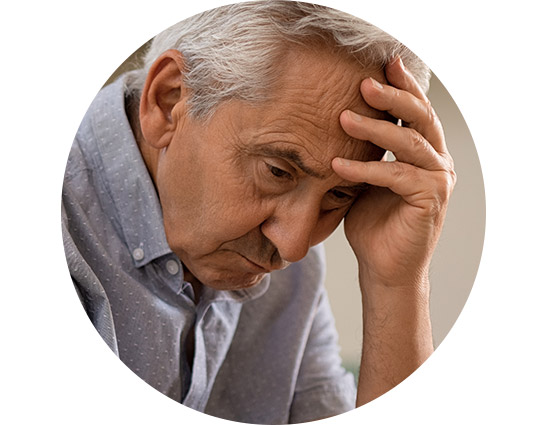

Adults with hearing loss not treated with hearing aids are more likely to report emotional loneliness. Our hearing care experts often see customers who have withdrawn from their favorite activities and social outings because they cannot hear as well as they used to.
Hearing aids today can help you hear speech in noise with better clarity and rejoin conversations, even in difficult listening environments.
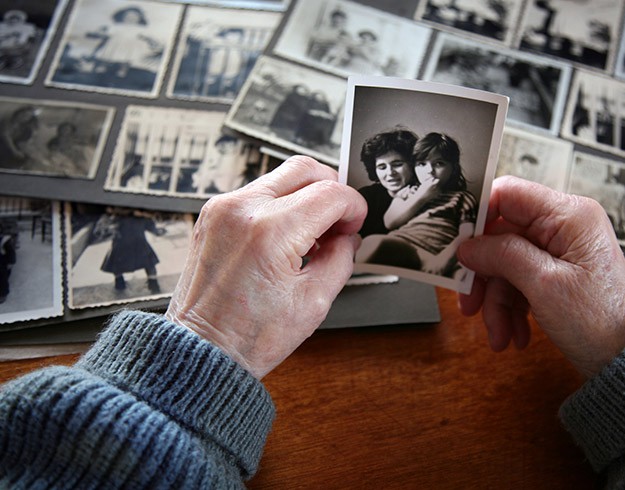
Hearing loss makes it difficult to turn things you hear into memories you can recall later. One study showed that Oticon hearing aids users had improved memory recall performance. The ability to hear better allows for better encoding of speech into a person’s memory.
How to get a risk-free hearing aid trial
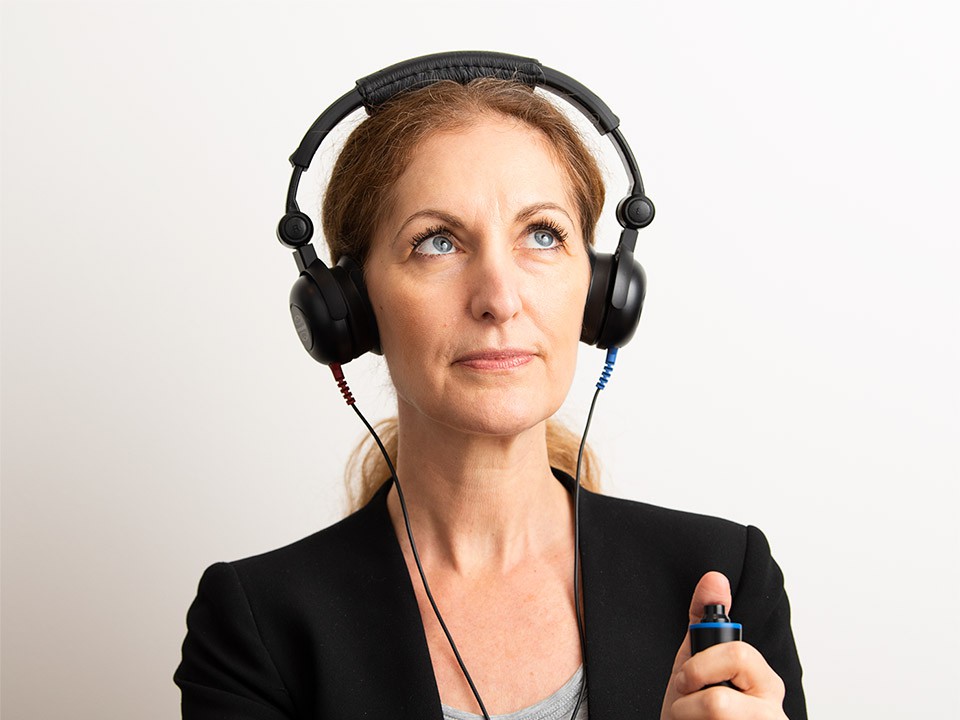
Answer a few questions to see if you could benefit from a hearing test.*
Your answers indicate that you experience symptoms of hearing loss. We strongly recommend booking a hearing assessment in one of our hearing centers.
The result is an indication. An in-person hearing assessment can determine if you have a hearing loss.
Your answers indicate that you experience some symptoms of hearing loss. We recommend booking a hearing assessment in one of our clinics.
The result is an indication. An in-person hearing assessment can determine if you have a hearing loss.
Your answers do not indicate that you experience symptoms of hearing loss. However, we encourage you to book a complimentary hearing assessment to establish a baseline.
The result is an indication. An in-person hearing assessment can determine if you have a hearing loss.
Adults with hearing loss are more likely to report fatigue when compared to adults with normal hearing. This is likely because your brain is working much harder to hear and interpret sounds and speech.
Hearing aids may help you to hear with more ease and reduce your listening effort.
Learn from others with hearing loss
In a review and meta-analysis of 27 studies and more than 5 million participants, hearing loss was associated with a greater risk of falls in older adults. Study authors think this is because the vestibular system (which controls balance) is closely related to the auditory (hearing) system.



An association between adults with hearing loss and income levels was found. 41 our of 46 studies showed a significant connection between hearing loss and income. Not hearing well at work can affect your overall performance and achievement.
Book a complimentary hearing assessment
Hearing aids play a key role in helping adults maintain quality of life, independence and social engagement. Without hearing clearly, you may find that you are left out of conversations or missing moments that matter to you.
Hearing aids may help you – book a free hearing test today to find out more.
Book a free hearing test

Au.D., Doctor of Audiology
Lic. #364, Chief Audiologist, HearingLife
Dr. Leslie Soiles founded HearingLife’s Shrewsbury office, formerly known as New England Hearing Instruments. As a Doctor of Audiology, she spent the first half of her career working with Ear, Nose and Throat (ENT) physicians.
Dr. Soiles now serves as Chief Audiologist for HearingLife. Click here to read her complete bio and learn more about her education and background.
Lawrence, B. J., Jayakody, D. M. P., Bennett, R. J., Eikelboom, R. H., Gasson, N., & Friedland, P. L. (2020). Hearing loss and depression in older adults: A systematic review and meta-analysis. The Gerontologist, 60(3), e137–e154. https://doi.org/10.1093/geront/gnz009
Zhang, Z., Li, J., Ge, S., Ma, T., Li, F., Lu, J., Si, S., Cui, Z., Jin, Y., & Jin, X. (2024). Bidirectional associations between sensorineural hearing loss and depression and anxiety: A meta-analysis. Frontiers in Public Health, 11. https://doi.org/10.3389/fpubh.2023.1281689
Shukla, A., Harper, M., Pedersen, E., Goman, A., Suen, J. J., Price, C., Applebaum, J., Hoyer, M., Lin, F. R., & Reed, N. S. (2020). Hearing Loss, loneliness, and social isolation: A systematic review. Otolaryngology--Head and Neck Surgery: Official Journal of American Academy of Otolaryngology-Head and Neck Surgery, 162(5), 622– 633. https://doi.org/10.1177/0194599820910377
Jayakody, D. M. P., Wishart, J., Stegeman, I., Eikelboom, R., Moyle, T. C., Yiannos, J. M., Goodman-Simpson, J. J., & Almeida, O. P. (2022). Is there an association between untreated hearing loss and psychosocial outcomes? Frontiers in Aging Neuroscience, 14. https://doi.org/10.3389/fnagi.2022.868673
Roy, R. A. (2018). Auditory working memory: A comparison study in adults with normal hearing and mild to moderate hearing loss. Global Journal of Otolaryngology, 13(3), 1-14. Https://doi.org/10.19080/GJO.2018.13.555862 Santurette, S., Ng, E.H.N., Jensen, J.J., & Loong, B.K.M. (2020). Oticon More™ clinical evidence: A glimpse into new BrainHearing™ benefits. [Whitepaper]. Oticon. 71933uk_wp_oticon-more_clinical_evidence_a-glimpse-into-new-brainhearing-benefits.pdf
Jiang, K., Spira, A. P., Lin, F. R., Deal, J. A., & Reed, N. S. (2023). Hearing loss and fatigue in middle-aged and older adults. JAMA Otolaryngology-- Head & Neck Surgery, 149(8), 758–760. https://doi.org/10.1001/jamaoto.2023.1328
Zapata-Rodriguez, V., & Santurette, S. (2024). Reducing sustained listening effort and listening stress with Oticon Intent™ [Whitepaper]. Oticon. 276127uk_research_brief_ot_sustained_listening_effort_and_listening_stress.pdf Holman, J. A., Drummond, A., & Naylor, G. (2021). Hearing aids reduce daily-life fatigue and increase social activity: A longitudinal study. Trends in Hearing, 25, 23312165211052786. https://doi.org/10.1177/23312165211052786
Yeo BSY, Tan VYJ, Ng JH, Tang JZ, Sim BLH, Tay YL, Chowdhury AR, David AP, Jiam NT, Kozin ED, Rauch SD. Hearing Loss and Falls: A Systematic Review and Meta-Analysis. JAMA Otolaryngology Head Neck Surg. 2025 May 1;151(5):485-494. doi: 10.1001/jamaoto.2025.0056. PMID: 40111358; PMCID: PMC11926736.
Mossman, A., DeMario, V. K., Price, C., Seal, S. M., Willink, A., Reed, N. S., & Nieman, C. L. (2023). Association between adult-onset hearing loss and income: A systematic review. Ear and Hearing, 44(5), 931–939.
Dawes, P., & Munro, K. J. (2024). Hearing loss and dementia: Where to from here? Ear and Hearing, 45(3), 529–536. https://doi.org/10.1097/AUD.0000000000001494