





Conductive hearing loss



What is conductive hearing loss?
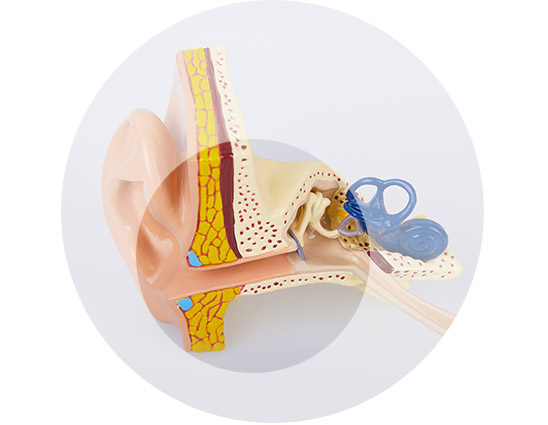
Conductive hearing loss occurs in the outer or middle part of the ear, where sound is converted to vibrations and sent to the inner ear. This type of hearing loss refers to issues with transferring sound waves (due to a blockage or other impediment).
Excessive earwax, a ruptured eardrum, or even ear infections can result in conductive hearing loss.

Book a complimentary assessment for conductive hearing loss
What causes conductive hearing loss?
Conductive hearing loss is a type of hearing loss that is often easily identifiable. The following causes have been associated with this type of hearing loss:
- Wax build-up
- Fluid in the ear
- Ear infections
- Damage to the ear drum
- Trauma
- Diseases such as osteoporosis
What is the difference between conductive and sensorineural hearing loss?
Hearing loss is divided into the following categories (based on which part of the ear is damaged): sensorineural, conductive, and mixed hearing loss.
Conductive hearing loss is usually the result of a disruption to the sound's path as it travels from the outer/middle ear to the inner ear, while sensorineural hearing loss occurs when the delicate nerve fibres of the inner ear become damaged.
Mixed hearing loss occurs when both sensorineural and conductive hearing loss occur in the same ear.
3 signs of conductive hearing loss
Conductive hearing loss is sometimes accompanied by pain or discomfort - or the feeling that "something is wrong" in the ear. Other common signs of conductive hearing loss may include:


Treatment for conductive hearing loss
Time may be all that is needed to recover from less severe cases of conductive hearing loss. In other cases, conductive hearing loss can be treated medically in one of the following ways:
- Antibiotics and anti-fungal medications can treat hearing loss caused by an ear infection
- Surgery may be recommended to repair damages to the eardrum or middle ear, if present
- Hearing aids may also be an option if other forms of treatment have not been sufficient
- Bone-anchored hearing systems

Au.D., Doctor of Audiology
Lic. #364, Chief Audiologist, HearingLife
Dr. Leslie Soiles founded HearingLife’s Shrewsbury office, formerly known as New England Hearing Instruments. As a Doctor of Audiology, she spent the first half of her career working with Ear, Nose and Throat (ENT) physicians.
Dr. Soiles now serves as Chief Audiologist for HearingLife. Click here to read her complete bio and learn more about her education and background.
Last reviewed 2025-07-01
Sources
2. https://hearinghealthfoundation.org/types-of-hearing-loss
3. Consequences of Early Conductive Hearing Loss on Long-Term Binaural Processing